Software engineering is quietly undergoing a fundamental shift. In an AI-assisted world, the real differentiator is no longer how fast you can write code, but how well you can design systems, review AI output, and make sound decisions under ambiguity. As teams get leaner and expectations rise, the definition of a high-impact engineer is evolving, and the real question is how quickly we adapt to what’s coming next.
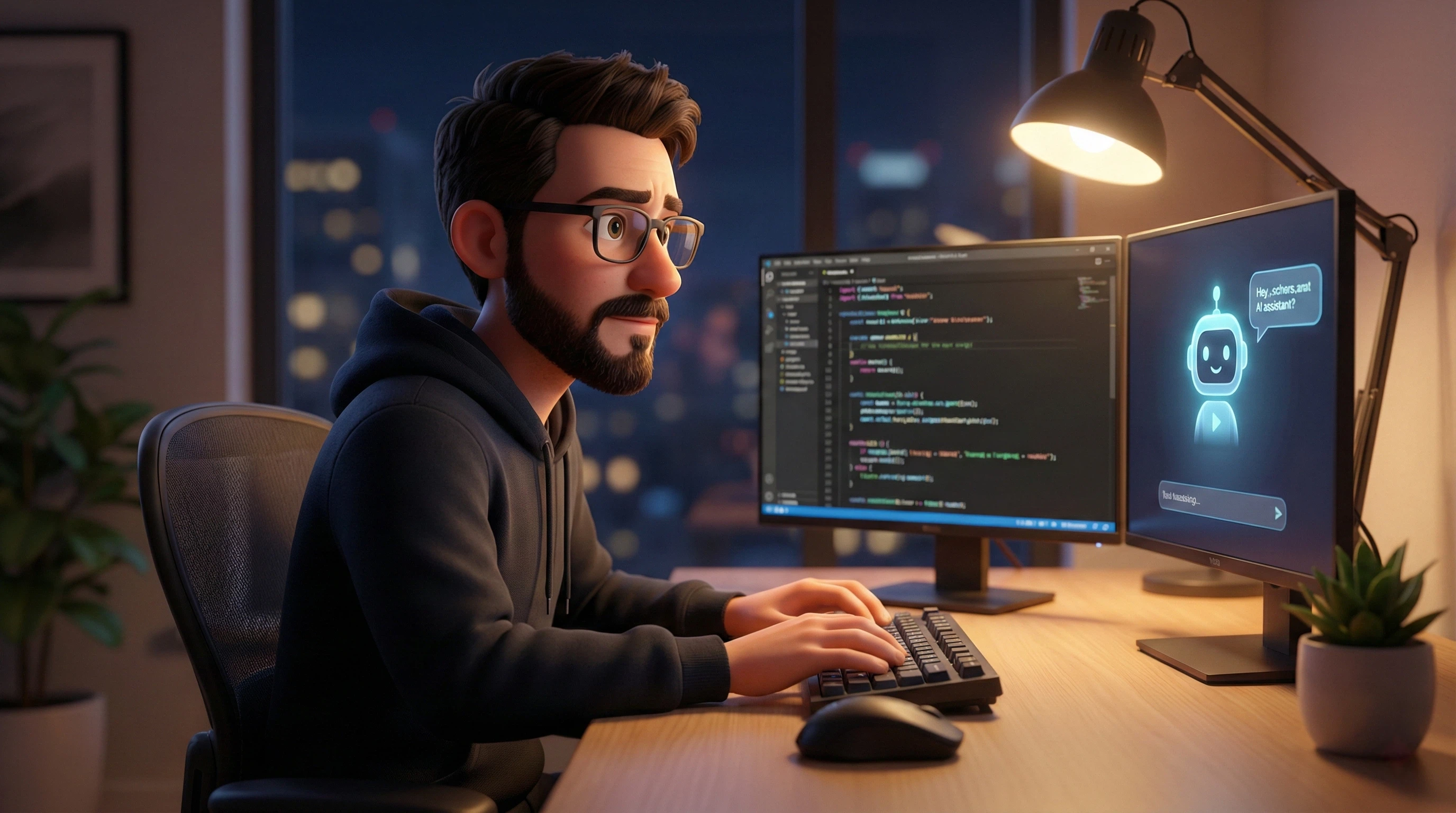
For years, software engineers were largely evaluated on one thing: how quickly we could recall algorithms and write code line by line under pressure. Whiteboard rounds, timed coding tests, and puzzle-heavy interviews became the industry standard.
But if we're honest about what happens in real production environments today, that model is rapidly losing relevance.
As a Senior Java backend engineer, my day-to-day work rarely involves writing large chunks of code from scratch. Instead, my time is spent designing resilient systems, reviewing AI-generated code, debugging complex production issues, and making trade-offs under real-world constraints and ambiguity.
And I'm not alone.
Across the industry, the ground beneath software engineering is shifting, quietly but unmistakably.
🧭 From Code Writers to System Thinkers
Traditional hiring assumed that great engineers are primarily fast coders. That assumption made sense in an era where:
- Boilerplate had to be written manually
- Documentation lookup was slower
- Code generation tools were primitive
- Engineering teams were smaller and more siloed
Today, AI-assisted development has changed the economics of coding.
Tools can now generate:
- CRUD APIs
- unit tests
- data models
- integration scaffolding
- even reasonably complex business logic
This doesn't mean engineers are becoming obsolete. It means the center of gravity of the job is moving.
The real differentiators today are:
- System design depth
- Architectural judgment
- Production debugging ability
- Trade-off thinking
- Code review maturity
- Domain understanding
In other words, we are moving from "How fast can you type?" to "How well can you think?"
🤖 AI Is Already in the Loop
Let's acknowledge reality: AI is no longer experimental in software workflows. It is already embedded in daily engineering practice.
Many senior engineers today are:
- Reviewing AI-generated pull requests
- Using AI to accelerate boilerplate
- Pair-programming with copilots
- Using AI to explore unfamiliar codebases
- Generating test cases and edge scenarios
This changes the skill stack in subtle but important ways.
The valuable engineer of today (and tomorrow) is someone who can:
- ✅ Prompt precisely
- ✅ Verify rigorously
- ✅ Debug deeply
- ✅ Design defensively
- ✅ Own production outcomes
AI can generate code. It still struggles with:
- long-term system evolution
- nuanced trade-offs
- context-heavy debugging
- business-aligned architecture
- production ownership mindset
That gap is where strong engineers continue to create enormous value.
📉 Layoffs and the Anxiety in the Room
We also can't ignore the broader industry backdrop.
The last couple of years have seen waves of layoffs across big tech and startups alike. Understandably, this has created real concern:
- Are engineering roles shrinking?
- Will AI replace junior developers first?
- Is the supply of engineers outpacing demand?
- What should engineers even optimize for now?
These are not irrational fears.
What is happening is a structural shift:
- 👉 Teams are becoming leaner
- 👉 Expectations per engineer are rising
- 👉 Breadth + depth is becoming the new baseline
- 👉 Ownership is valued more than output volume
We are likely entering an era of fewer but more high-leverage engineers per team.
🧪 The Interview Question No One Has Fully Solved
If the job is changing, interviews must change too.
But most hiring pipelines are still anchored in:
- timed DSA rounds
- trivia-style Java questions
- artificial whiteboard problems
- LeetCode-style filtering
The mismatch is becoming increasingly visible.
Because in real life, senior engineers are evaluated on:
- How they handle messy systems
- How they reason about failures
- How they design under constraints
- How they review imperfect code
- How they debug distributed issues
- How they communicate trade-offs
Yet many interviews still test none of these directly.
This raises an uncomfortable but important question:
What should we even be testing for now?
Forward-looking companies are already experimenting with:
- take-home architecture exercises
- production debugging simulations
- code review rounds
- AI-assisted problem solving
- system evolution discussions
But the industry as a whole is still in transition.
🔮 The Next 2–3 Years: What Likely Changes
No one can predict the future perfectly, but some trends are already visible.
1. AI becomes default infrastructure
Within a few years, AI assistance will likely be assumed in most engineering workflows, similar to how Git or CI/CD became standard.
2. Junior roles will evolve, not disappear
Entry-level roles may shrink in pure coding work but expand in:
- AI supervision
- testing
- system understanding
- integration work
The bar may rise, but the path will still exist.
3. System design becomes the new filter
For mid-to-senior engineers, system thinking will matter more than ever. The ability to reason about scale, failure modes, and trade-offs will be a primary differentiator.
4. Ownership will trump output
Engineers who can own problems end-to-end, from design to production, will remain highly valuable.
5. The "10x engineer" definition will change
It will be less about typing speed and more about:
- leverage
- judgment
- clarity of thinking
- ability to work with AI effectively
🧠 So… Will Interviews Even Be Needed?
Probably yes, but they will evolve.
As long as companies hire humans to build complex systems, some form of evaluation will exist. What is likely to change is what we measure and how we measure it.
We may see more:
- scenario-based evaluations
- collaborative problem solving
- AI-in-the-loop interviews
- real-world debugging exercises
- architecture deep dives
The whiteboard-only era is unlikely to fully survive the next wave of tooling.
🚀 Final Thought
Software engineering is not dying.
But the shape of a valuable engineer is changing faster than many hiring loops and career plans have caught up with.
The safest bet today is not to optimize purely for:
- ❌ memorizing problems
- ❌ typing faster
- ❌ grinding syntax
Instead, double down on:
- ✅ system design
- ✅ production ownership
- ✅ debugging depth
- ✅ architectural thinking
- ✅ AI collaboration skills
Engineers who adapt early will not just survive this shift, they will lead it.