India's ban on real-money gaming platforms is a necessary step to protect families from financial devastation. With over 45 crore Indians affected and ₹20,000 crore lost in middle-class savings, this decision prioritizes people over profit.
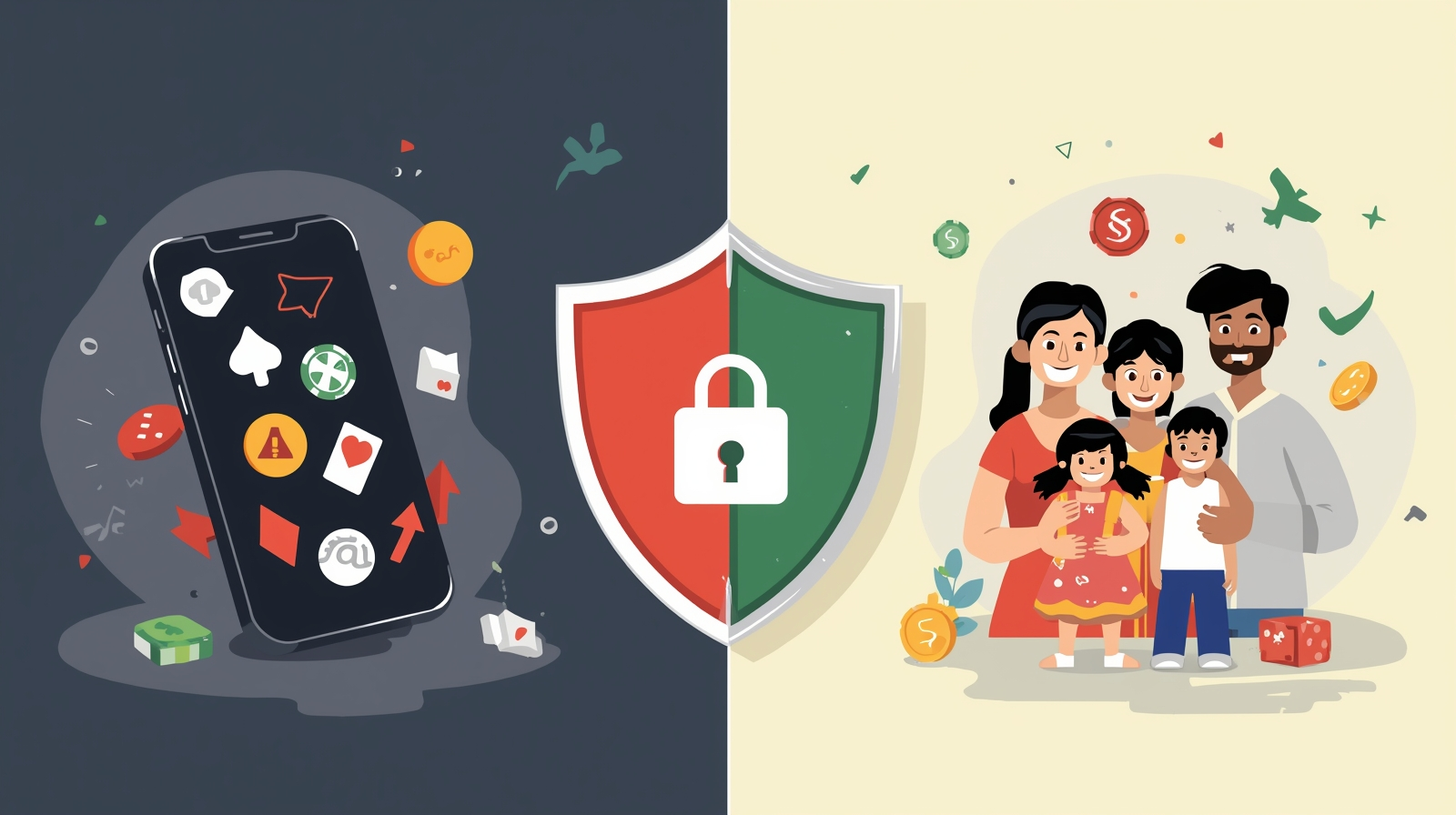
I have always been critical of real-money online gaming platforms like Dream11, poker and rummy apps, and of the celebrities who promote them as if their lives depended on it. The recent decision to impose a national ban on such platforms is, in my view, a necessary step for protecting people and families.
This isn't about being anti-technology or anti-gaming. It's about recognizing when an industry crosses the line from entertainment to exploitation, and taking action to protect vulnerable individuals and families from financial and emotional devastation. Behind every statistic, there's a real person, a real family, and real pain that we can no longer ignore.
📊 The Facts Are Alarming
More than 45 crore Indians have engaged with these apps, leading to an estimated ₹20,000 crore loss in middle-class savings. That's not just a number. That's someone's dream home that was never bought, a child's education that was never funded, a family's future that was stolen away in moments of weakness.
Although comprehensive national data on suicide specifically due to online gaming is limited, reports from states like Karnataka and Tamil Nadu, combined with rising therapy demand and helpline calls, point to a broader, worrisome trend across India. Every call to a helpline represents someone who reached their breaking point. Every therapy session booked is a life that's been derailed.
Families across the country have been devastated, with young professionals trapped in debt, parents losing savings, and students risking tuition money. I've heard stories of parents who discovered their son had lost their entire retirement fund. I've read about students who took their own lives after losing money meant for their college fees. These aren't isolated incidents. They're a pattern of human suffering that we can no longer accept.
The industry calls these "skill-based" games, but what we see are manipulative designs, addictive algorithms, and financial ruin.
🔗 How These Apps Hook Users?
Understanding how these platforms manipulate users is crucial to recognizing why they're so dangerous. These apps don't rely on chance or skill alone. They use sophisticated psychological tactics designed to keep you playing and losing, often without you even realizing what's happening.
- Variable reward schedules: Like slot machines, these apps use unpredictable rewards to keep users coming back, creating a psychological dependency that's hard to break.
- Loss disguised as near-wins: The "almost won" scenarios are designed to make players feel they're just one game away from winning big, encouraging continuous play.
- Easy access to credit: Many platforms offer instant loans or credit facilities, making it dangerously easy to chase losses with money users don't actually have.
- 24/7 availability: Unlike physical casinos, these apps are always accessible, removing any natural barriers to excessive gambling.
❌ Addressing the "What About Alcohol & Cigarettes" Argument
Some critics argue, "If the government bans real-money games, why not ban beer, alcohol, or cigarettes, which are also harmful?"
While it sounds logical, it misses the core difference:
- Regulation and visibility: Alcohol and cigarettes are already heavily regulated (taxes, age restrictions, health warnings). Their consumption is visible, tangible, and capped by cost. You can't accidentally drink 100 bottles of beer in one sitting.
- Digital manipulation: Real-money gaming apps, however, operate in the dark corners of the digital economy. Their addictive nature is not just habit-forming but algorithmically engineered to maximize loss. There's no "limit". Someone can lose their life savings in a single night, often without their family even knowing until it's too late. Imagine waking up to find your entire savings gone, with nothing but a phone screen showing your losses.
- Speed and scale: The speed at which losses can accumulate in digital gaming is unprecedented. A physical casino visit requires planning, travel, and time. These apps can drain accounts in minutes, 24/7, from the privacy of one's phone.
This makes comparing them a false equivalence. The urgency and scale of harm from these apps justify stronger action.
🗣️ The Industry Response
Dream11's ex-VP Smrita Singh Chandra described the ban as "deeply unjust" and "deeply unethical." With respect, I see it differently. The real injustice is watching families lose their savings or young people take their lives over app-induced debt. No amount of validation, taxation or jobs can outweigh that social cost. When a mother loses her son to suicide because of gambling debt, or when a father has to sell his house to pay off his child's losses, that's the real injustice we need to address.
The industry often highlights the jobs it creates and the taxes it pays. But when we weigh a few thousand jobs against the financial and emotional devastation of lakhs of families, the math doesn't add up. The social cost far exceeds any economic benefit these platforms claim to provide. How do you measure the cost of a broken family? How do you quantify the pain of a parent who lost everything? These are the real costs that matter.
Moreover, the industry's self-regulation has proven ineffective. Despite promises of responsible gaming features, the core business model remains unchanged: maximize user engagement and spending, regardless of the human cost.
🌏 The Bigger Picture
Yes, some jobs in the industry will be affected, and I don't take that lightly. Every job loss affects a real person and their family. But the bigger picture is about protecting lakhs of people from debt, addiction and tragedy. Gaming culture will continue through e-sports and non-money games, which are encouraged. What is being stopped is the normalization of betting as entertainment. We're choosing to protect thousands of families over preserving a business model built on human suffering.
What This Ban Means:
- Protection over profit: The ban prioritizes the well-being of citizens over corporate profits, setting a precedent for responsible tech regulation.
- Gaming vs. gambling: It draws a clear line between legitimate gaming (e-sports, skill-based games without money) and gambling disguised as entertainment.
- Prevention over treatment: Rather than waiting for more families to be destroyed and then offering help, this ban prevents the harm from occurring in the first place. It's better to stop the bleeding before it starts than to treat wounds that never should have happened.
The Path Forward:
This ban doesn't mean the end of gaming in India. E-sports, competitive gaming, and skill-based games without real-money stakes will continue to thrive. What changes is that we're no longer allowing predatory business models to exploit vulnerable individuals under the guise of "skill-based gaming."
💡 The Role of Celebrities and Influencers
It's time we hold celebrities and influencers accountable for the products they endorse. When a famous actor or cricketer promotes a real-money gaming app, they're not just advertising a product. They're lending credibility to a potentially destructive activity. Their endorsement can make vulnerable individuals believe that gambling is safe, fun, and socially acceptable. When someone you admire tells you something is okay, it's hard not to believe them. That trust comes with responsibility.
We need to expect more responsibility from public figures. Their influence comes with a moral obligation to consider the impact of their endorsements, especially when they involve products that can cause financial and emotional harm.
🙏 Final Thoughts
As professionals and citizens, we should support steps that put people over profit. The ban on real-money gaming platforms is not about restricting freedom. It's about protecting vulnerable individuals and families from exploitation. It's about ensuring that a parent doesn't have to choose between feeding their family and paying off gambling debt. It's about making sure a student doesn't lose their future because of one bad night.
This decision sends a clear message: when an industry's business model relies on addiction and financial ruin, society has the right and responsibility to intervene. It's a step toward a more responsible digital economy where technology serves people, not the other way around. We're saying that human lives matter more than profit margins, that families matter more than quarterly earnings reports.
Let's hope this marks the beginning of more thoughtful regulation in the digital space, where human well-being takes precedence over corporate profits. Because at the end of the day, behind every policy decision, every statistic, and every ban, there are real people. People who deserve protection. People who deserve a chance to build a better future without the shadow of addiction and debt hanging over them.
That's what this ban is really about. It's about giving people their lives back.